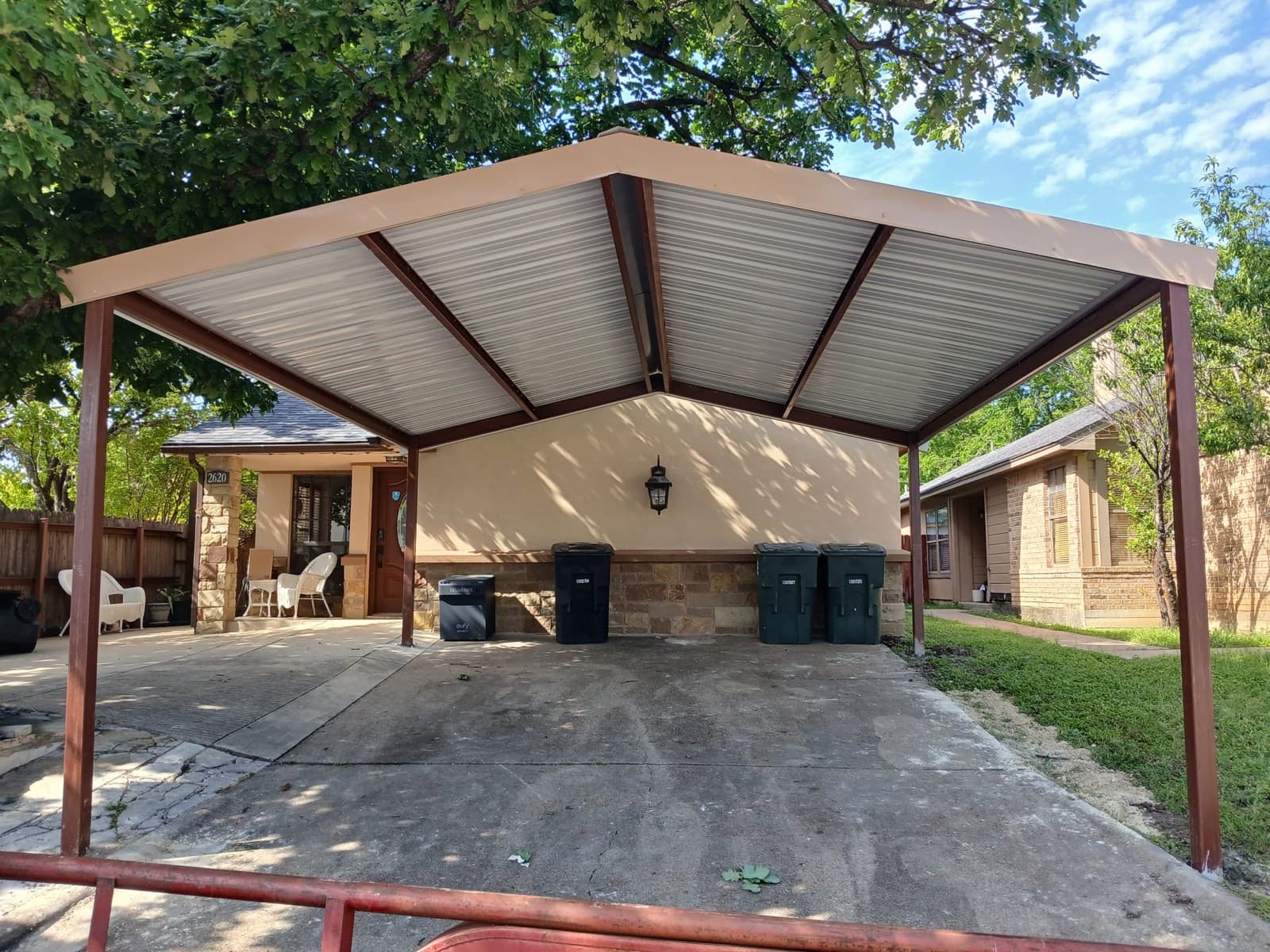
Central Texas is not a forgiving climate for metal buildings. Bell County averages multiple high-wind events per year, hail is a seasonal certainty, and the summer UV load degrades coatings faster than in most of the country. When you’re buying a metal carport, garage, or barn in Temple, Killeen, or Belton, TX, the construction method — welded or bolted — determines how your structure performs in those conditions over the next 20 to 30 years.
This guide is written from the field, not from a manufacturer’s brochure. Here’s what the difference actually means.
What Is a Bolted Metal Building?
A bolted structure — sometimes called a “bolt-together” kit — is manufactured off-site, shipped to your address, and assembled on your property. The main structural members are connected with bolts and slip-fit collars. National brands like Alan’s Factory Outlet and East Texas Carports operate this model almost exclusively.
Bolted kits are cheaper to produce because the manufacturing is standardized. The components are 14-gauge or lighter tubing, pre-drilled and pre-punched at the factory. Installation is faster when everything goes right. When something goes wrong — site isn’t level, component is damaged in transit, anchor placement is off — the kit structure is much harder to adapt in the field.
The critical detail: most bolted kit warranties are voided by wind events above 90–110 MPH. Central Texas regularly sees gusts exceeding those thresholds during severe thunderstorm seasons.
What Is a Welded Metal Building?
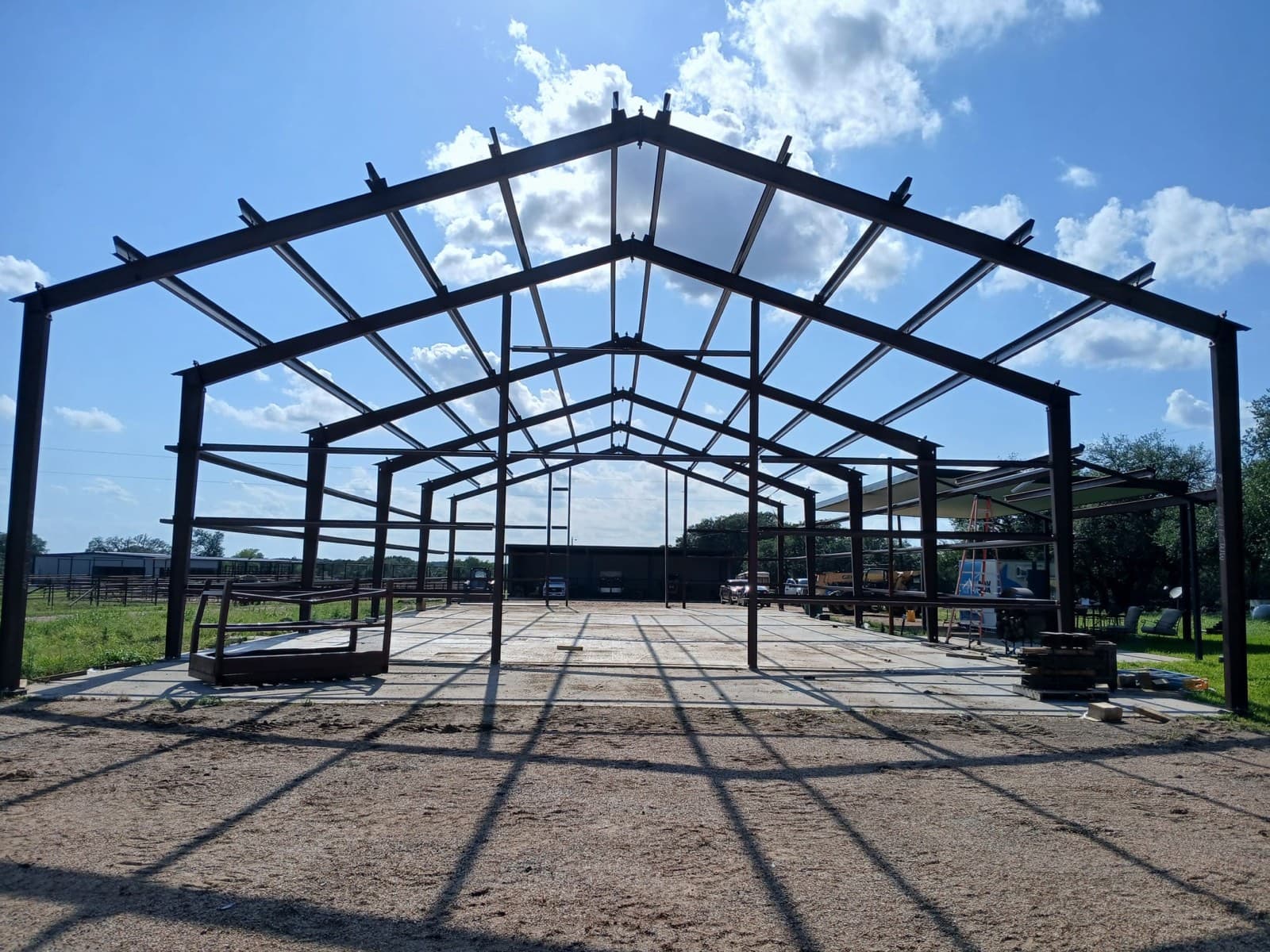
A welded structure is fabricated on your site. The steel members are cut to exact dimensions for your property and welded together using a MIG or stick welder. The joints are continuous — there are no slip-fit connections that can work loose under vibration or thermal cycling.
Triple J Metal uses a Miller Bobcat welder and 12-gauge red iron for our primary structural frames. 12-gauge steel has substantially higher tensile strength than the 14-gauge tube used in most bolt-together kits, and our frames are engineered for 140 MPH wind loads— the standard required by Texas windstorm certification zones near the Gulf.
Custom dimensions are another practical benefit. We cut steel to your exact site dimensions. A bolted kit comes in fixed sizes — 12×20, 18×21, 20×20 — and you adjust your property plans to fit the kit. With welded construction, the structure is designed around your site.
Side-by-Side Comparison
| Welded Red Iron (Triple J) | Bolted Kit | Wood Frame | |
|---|---|---|---|
| Wind rating | 140 MPH engineered | 90–110 MPH typical | 90 MPH typical |
| Frame gauge | 12-gauge standard | 14-gauge typical | N/A |
| Joints | Continuous welds | Bolt + slip-fit | Nailed/screwed |
| Custom dimensions | Any size | Fixed kit sizes | Any size |
| Permits | We pull them | Customer handles | Contractor varies |
| Concrete included | Yes — same contract | No — customer source | Varies |
| Warranty | Frame + structure | Voided above 90 MPH winds | Builder warranty |
| Real estate value | Permanent improvement | Personal property | Permanent improvement |
| Lead time | Same week (typical) | 4–16 weeks | 4–12 weeks |
The Anchor System: Where Warranties Actually Get Voided
Most bolted kit warranties have a buried clause about anchoring. If your structure isn’t anchored to the correct spec for your substrate, the wind warranty is void — even if you paid for the upgrade frame.
Here’s what the anchor requirements actually look like in Central Texas:
- Dirt or gravel sites: require 30-inch mobile home-style earth anchors, driven at the correct angle. Standard 3-foot rebar in the ground does not meet wind warranty requirements on most manufacturer specs.
- Asphalt sites: require 30-inch asphalt anchors specifically designed for the substrate.
- Concrete pads:require 6-inch concrete sleeve anchors, properly torqued. A concrete pad that wasn’t designed with anchor bolt locations leaves you drilling post-pour, which is weaker.
Because Triple J handles the concrete pour and the steel erection in the same contract, we place anchor bolts in the wet slab at the correct spec before it cures. The result is a structurally correct anchor system — not a retrofit.
Hail, UV, and the Painted Galvalume® Finish
Frame construction matters for wind. Panel choice and finish matter for the other Central Texas hazards — hail impact, UV degradation, and rust at cut edges and fastener points.
Triple J sources panels from leading regional Texas suppliers. The panels we install use Galvalume® substrate — a zinc-aluminum alloy that resists rust at cut edges — with painted finishes backed by a 40-year warranty engineered for high-UV climates. 26-gauge panels provide meaningful hail resistance compared to the 29-gauge panels used in many lower-cost kits.
Optional Drip Stop anti-condensation felt on the panel underside is worth considering for enclosed structures or barns in Bell County — the diurnal temperature swings in this climate create condensation cycles that degrade unprotected panels from the inside over time.
Which Is Right for Your Property?
If your primary concern is minimizing upfront cost and you’re comfortable managing site prep, permits, and concrete coordination separately, a bolted kit from a national dealer may work. Understand what you’re accepting on wind warranty.
If you want a structure that is permanent — that adds appraised real estate value, handles Central Texas storms, and requires one phone call — a welded structure built on your slab by a local crew is the correct answer. It costs more than a kit. It costs less than the alternative of managing three separate contractors and hoping they coordinate correctly.
Fill out the quote form below or call our Temple, TX office. We’ll walk you through the right gauge, panel, anchor system, and timeline for your specific property.