 Triple J Metal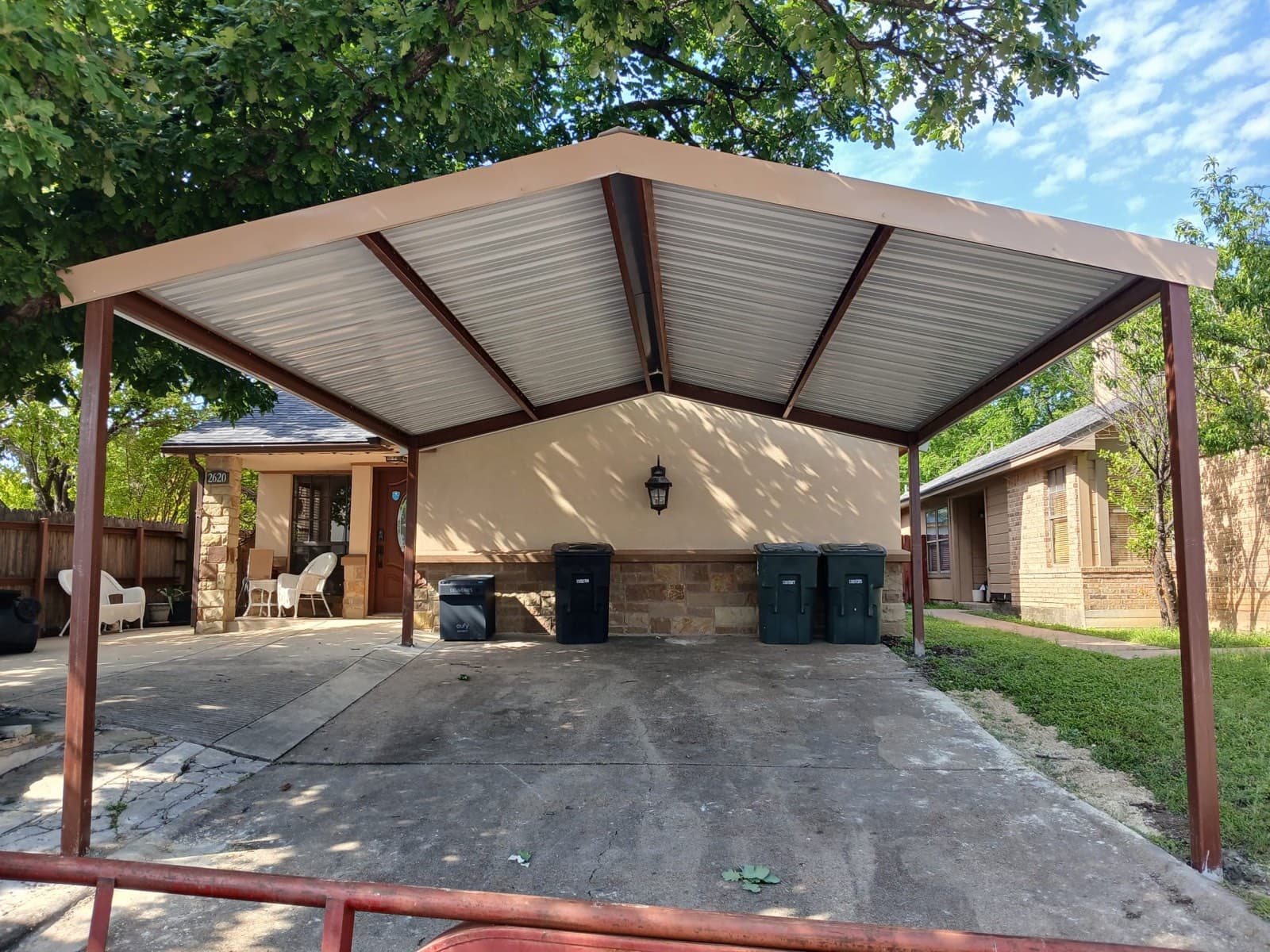
Central Texas sits on one of the most problematic soil types in North America for construction foundations. Blackland Prairie clay — the dark, expansive soil that runs through Bell County, Temple, Killeen, and Belton — swells dramatically when wet and shrinks and cracks when dry. The same soil that makes this region excellent farmland will heave, tilt, and crack a concrete slab that wasn’t designed for it.
This guide explains how Blackland Prairie soil affects metal building foundations specifically — what we do differently because of it, and what to watch for when evaluating a quote from any Central Texas contractor.
What Makes Blackland Prairie Clay Different
The key property of Bell County’s expansive clay is its Plasticity Index (PI) — a measure of how much water the soil absorbs before it becomes plastic (pliable). Bell County soils commonly have PI values above 40, sometimes above 60. For context, non-expansive soils have a PI under 15.
A high PI means:
- The soil volume changes significantly between wet and dry seasons
- Foundations built at grade without adequate design will move seasonally
- Post-tension and fiber reinforcement in concrete slabs is strongly recommended
- Anchor systems must account for soil movement — an anchor that’s solid in summer may loosen as the soil contracts in a dry winter
How Soil Type Affects Concrete Specification
Standard concrete mix for a residential slab is 3,000 PSI, and that is what Triple J pours as standard for carport and garage slabs. What matters more than the number on the mix ticket is what sits under and around it: correct thickness, reinforcement, a perimeter beam, and anchor depth set for the soil actually on your lot. For the most reactive clay sites we can pour a 4,000 PSI mix on request — the higher strength rating makes the slab more resistant to cracking under differential movement, the scenario where one edge of your slab moves up while the other stays flat.
Beyond mix strength, slab thickness matters. Our standard slab for a carport or garage pad is 4 inches, with 6-inch thickness at the perimeter beam. For structures over 800 square feet or on sites with known drainage problems, we recommend a 5-inch slab with post-tension cables.
Rebar spacing also changes for expansive soil. We use #4 rebar on 18-inch centers rather than the 24-inch spacing common on non-expansive soil pads. The additional rebar doesn’t prevent the soil from moving — nothing does — but it distributes the load across a larger area and keeps hairline cracks from becoming structural cracks.
Anchor Systems: What Each Substrate Requires
| Substrate | Anchor Type | Min. Depth | Wind Warranty Compliant |
|---|---|---|---|
| Expansive clay (Blackland Prairie) | 30" mobile home earth anchors + helical piers for large structures | 30" | Yes — if spec met |
| Rocky caliche subsoil | Concrete pier footings or sleeve anchors into rock | 12–18" into rock | Yes — if spec met |
| Concrete slab (poured by Triple J) | 6" sleeve anchors set in wet concrete before cure | 6" embedment | Yes — best method |
| Existing concrete pad | Epoxy-set sleeve anchors (Hilti or equiv.) | 4–6" embedment | Yes — requires core drill |
| Asphalt | 30" asphalt-specific anchors | 30" | Yes — if spec met |
| Dirt/gravel (no slab) | 30" earth auger anchors + concrete collar | 30" | Yes — requires concrete |
The anchor spec that actually matters for your warranty is what’s in the manufacturer’s installation manual — not what the installer tells you verbally. When Triple J provides a warranty, the anchor system is documented in the contract. Ask any contractor you’re evaluating to specify the anchor type and depth in writing before you sign.
Site Drainage: The Most Underestimated Variable
Blackland Prairie clay doesn’t drain. When it rains, water sits on top of the clay rather than percolating through. A metal building slab that doesn’t have positive drainage away from all four sides will have standing water against the foundation during wet seasons — accelerating the expansion cycle and the anchor loosening problem.
Before we pour any slab in Bell County, we evaluate the site drainage. Our John Deere skid steer can grade the site perimeter to establish positive drainage if needed. This isn’t always required — many sites have adequate natural drainage — but it’s part of the site evaluation on every project.
What a Properly Engineered Slab Looks Like on Expansive Soil
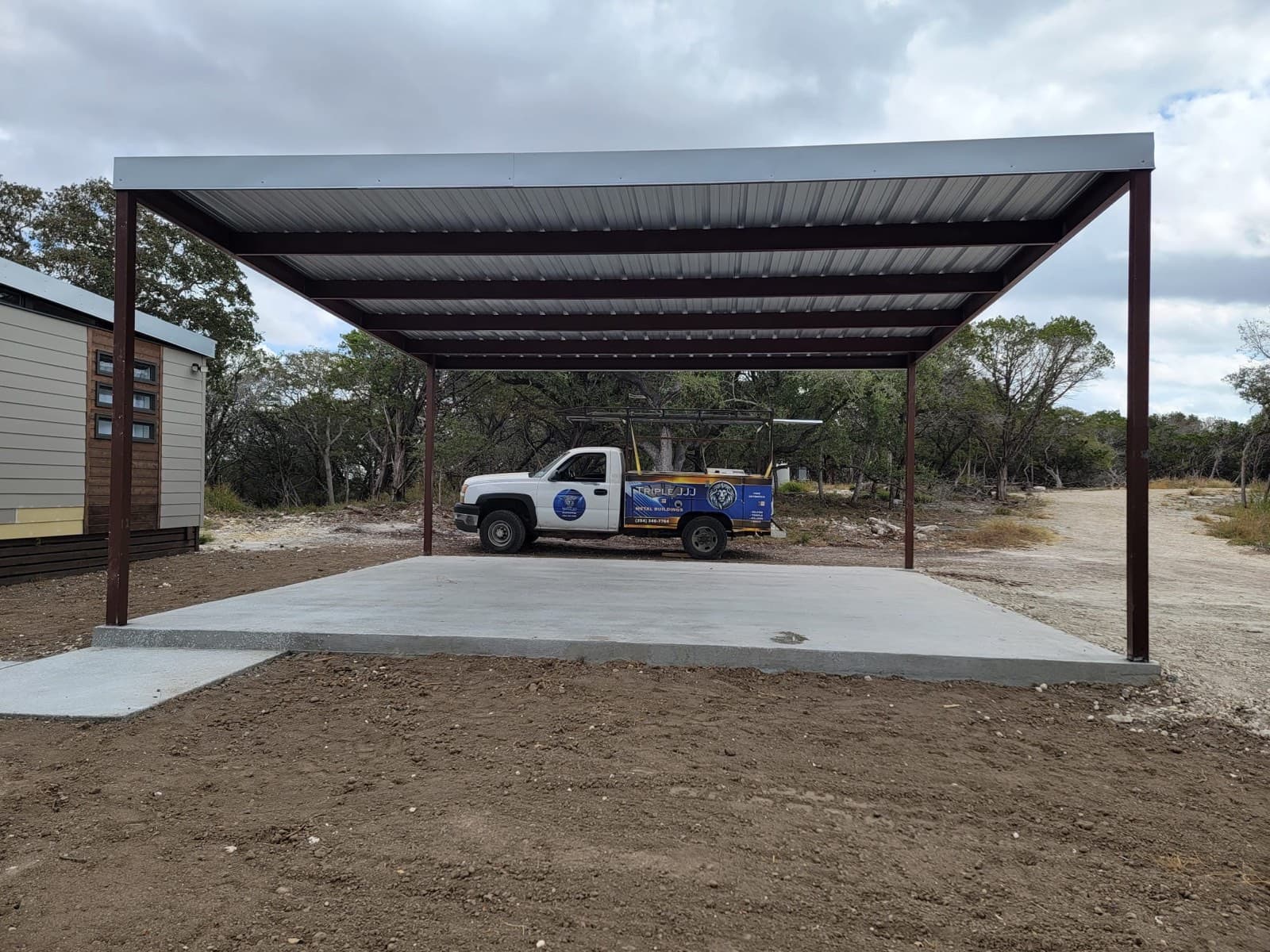
For a typical 20×30 carport or garage pad on Blackland Prairie soil in Bell County, here’s what Triple J includes as standard:
- Site graded for positive drainage away from slab perimeter
- 6-inch compacted base course (crushed limestone or caliche) below slab
- 4-inch slab, 3,000 PSI mix standard (4,000 on request), with 6-inch perimeter beam
- #4 rebar on 18-inch grid
- Anchor bolts placed in wet concrete at engineered locations before cure
- 2% grade toward drainage direction across slab surface
This is what “turnkey” means in practice — the foundation is engineered for where you actually live, not just poured to minimum standards to keep the quote competitive.
Ask the Right Questions Before You Sign
If you’re getting quotes from multiple contractors in Central Texas, ask each one:
- What PSI concrete do you use? (3,000 PSI is the residential standard — ask what thickness, reinforcement and perimeter beam come with it.)
- What rebar spacing do you use?
- How do you handle anchor placement — wet-set or post-pour?
- Do you grade the site for drainage?
- What happens if the slab cracks within the first two years?
The answers tell you whether the contractor has built anything in Bell County’s specific soil conditions before — or whether they’re applying a generic quote from somewhere else.
Call us or fill out the quote form. Site address is helpful — we can review county soil maps for your specific parcel before we quote the foundation.