 Triple J Metal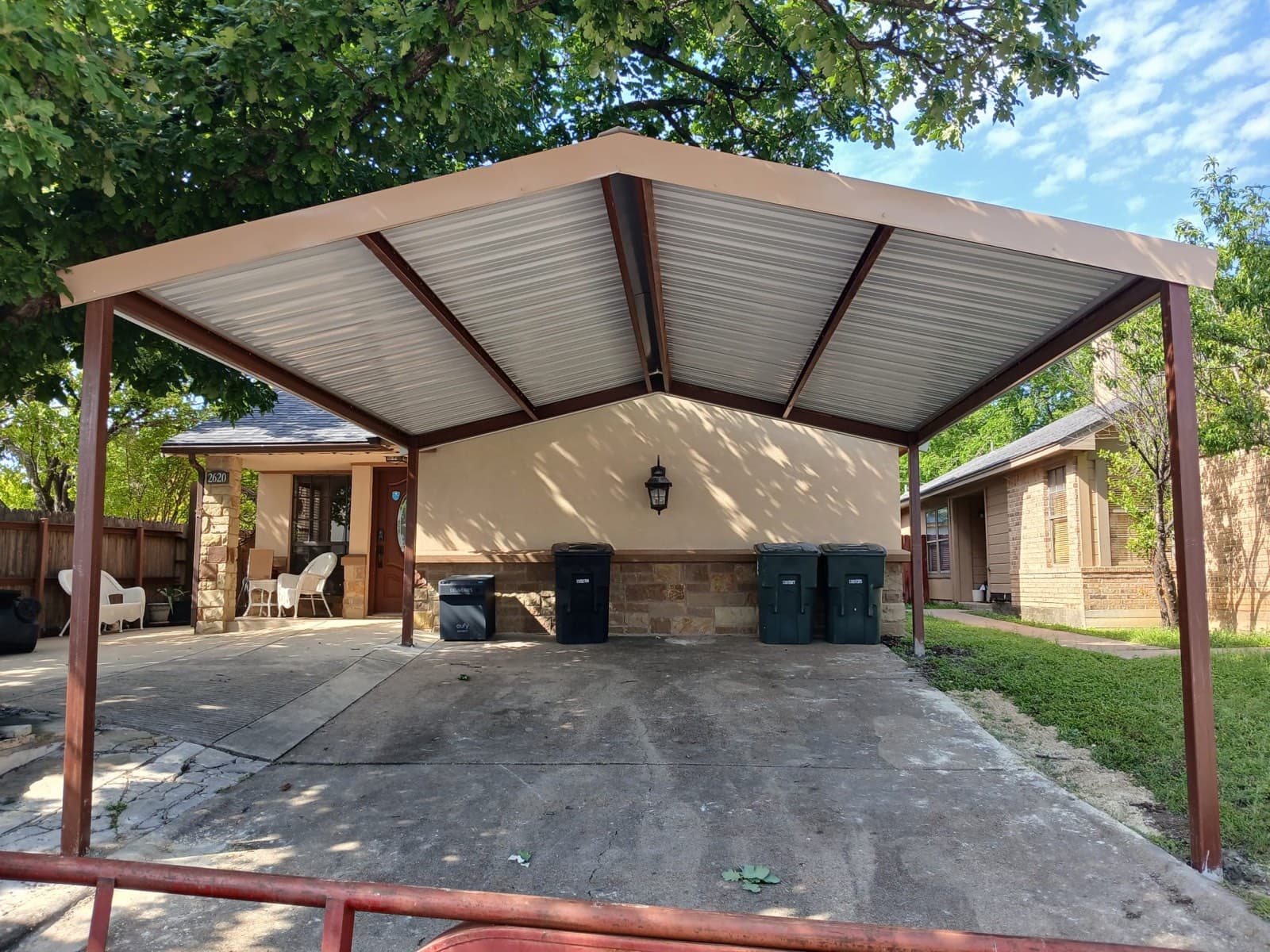
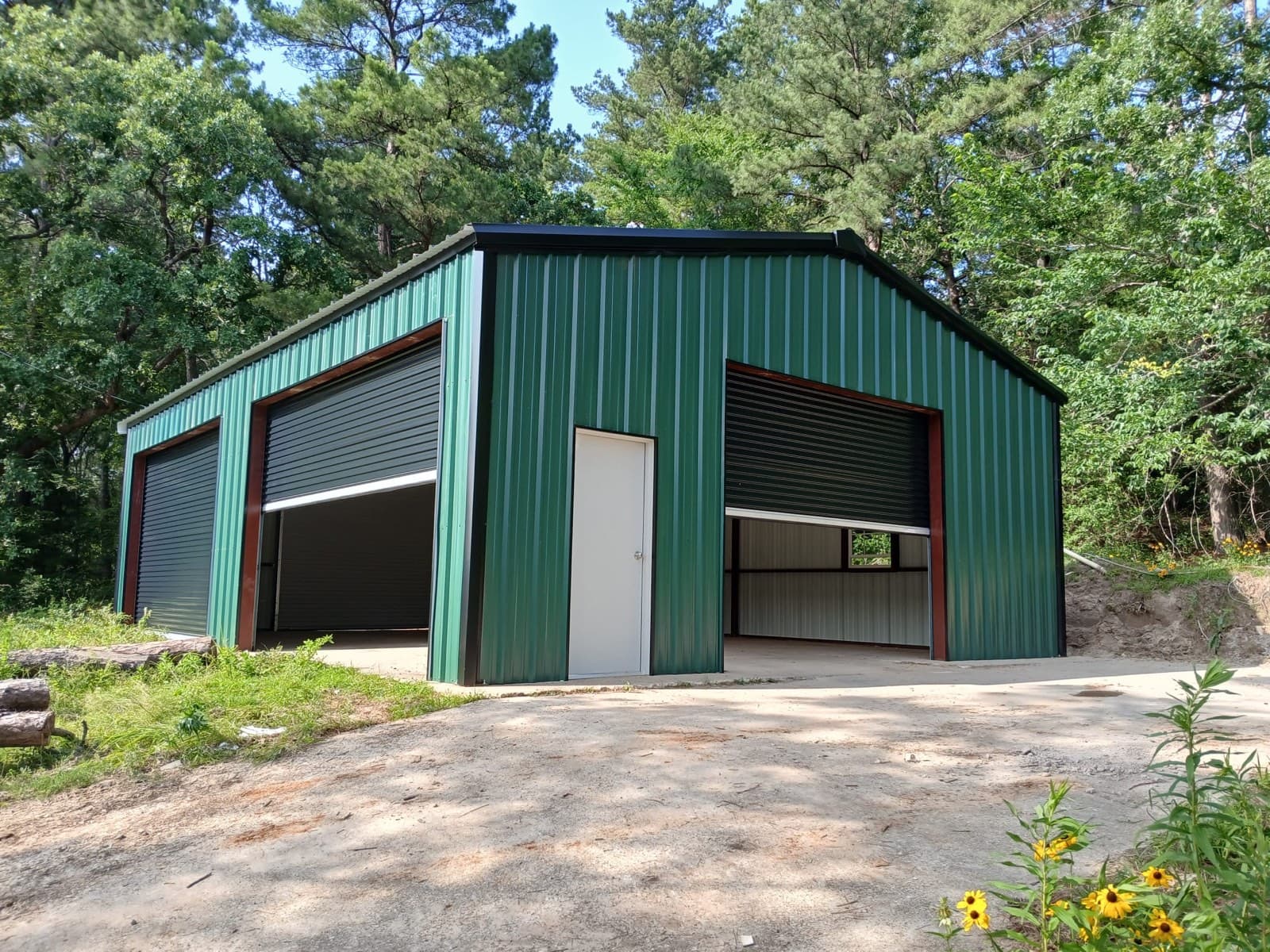
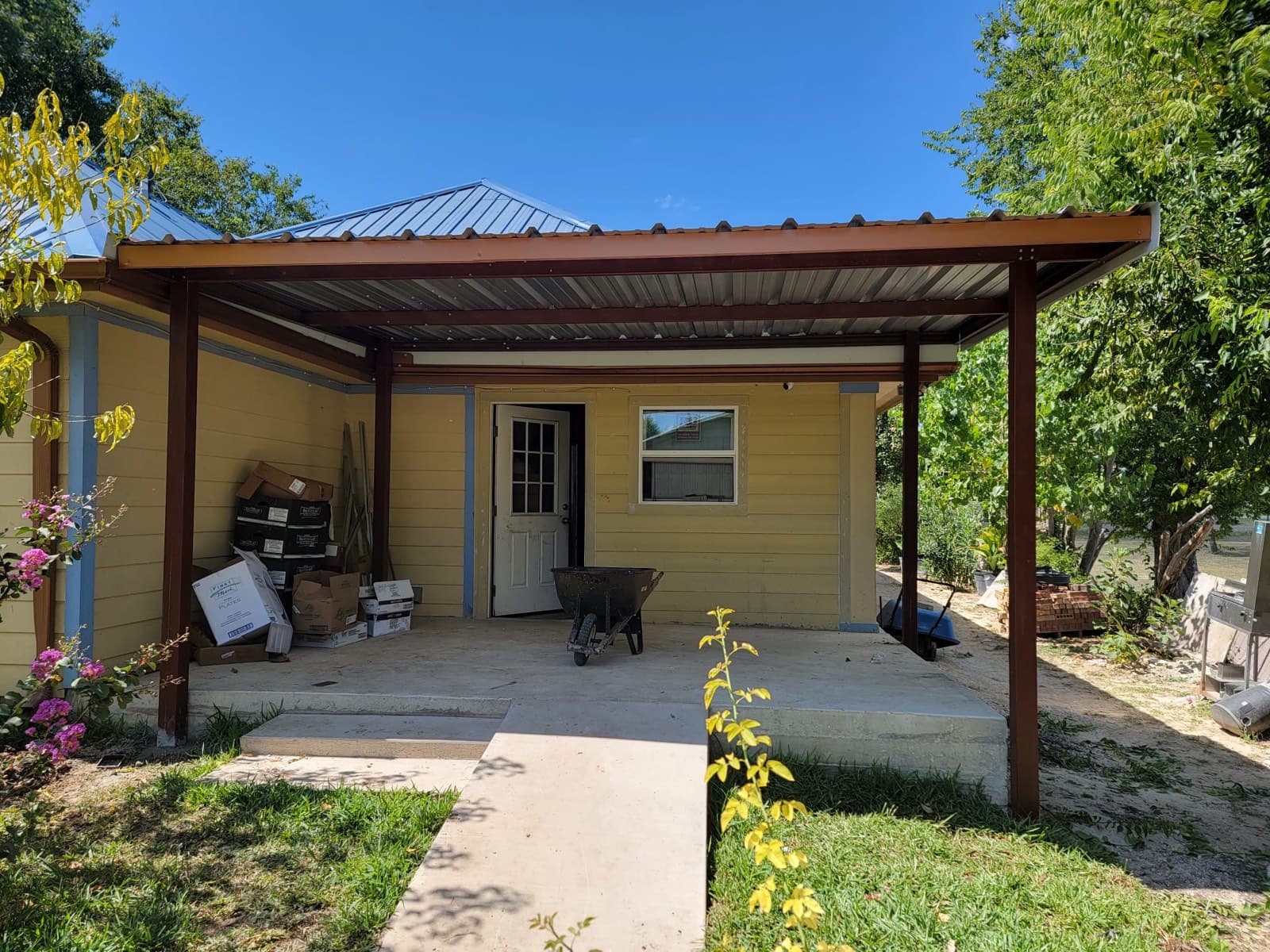
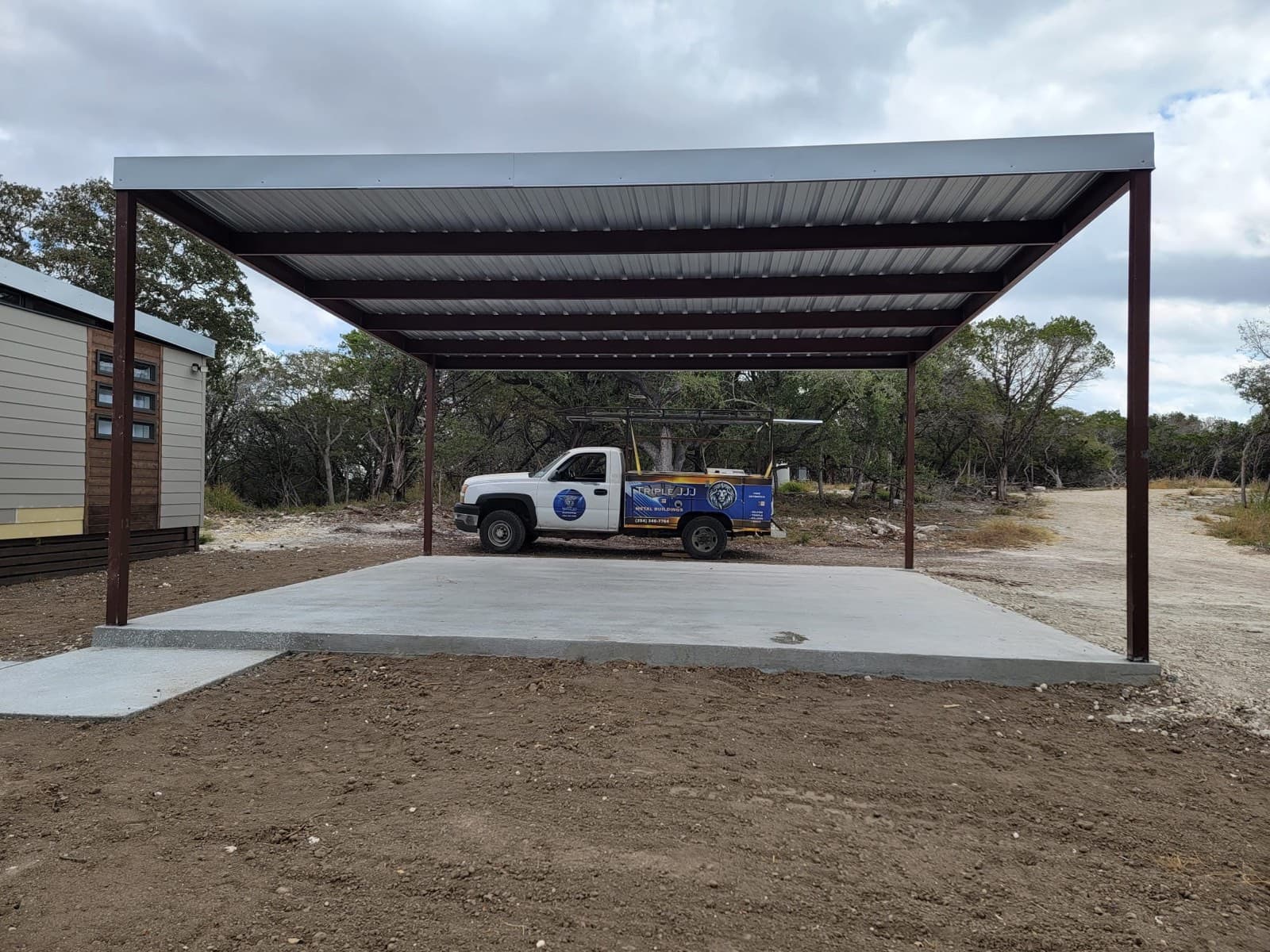
Heritage Oaks in Killeen and Bella Charca in Nolanville are two of the fastest-growing luxury communities in Central Texas. Homes in these neighborhoods run $500,000 to $900,000. The HOA architectural guidelines in both communities were written to protect those property values — which means a standard utility-grade metal shed or kit carport will get rejected by the Architectural Review Committee (ARC) before construction begins.
Whether a metal carport or patio cover passes comes down to what your guidelines say about color, fasteners and placement. Here’s what the Triple J Metal crew in Temple, TX looks at when we plan a build for these communities.
What HOA Guidelines Usually Restrict
HOA architectural guidelines in luxury Central Texas subdivisions commonly restrict:
- Utility-grade appearance: Exposed fastener heads on the visible roof and wall surfaces
- Industrial color palettes: Unpainted Galvalume or bright colors that don’t coordinate with the home exterior
- Visible hardware: Bolted connections and exposed rafter tails on the structure perimeter
- Non-compliant setbacks: Structures that don’t maintain minimum distances from property lines, the main dwelling, and drainage easements
One Panel, Color-Matched to Your Home
Every Triple J build uses one panel: 26-gauge PBR on a Galvalume® base with a 40-year painted finish. PBR is an exposed-fastener R-panel, so the screws show on the face of the panel. We don’t install standing seam, Board & Batten or thinner 29-gauge panels. Keeping to one panel keeps the quote simple, and the spec you hand your ARC is exactly what gets built.
Where an HOA allows metal accessory structures, color and roof style usually carry the review: panels and trim that coordinate with the house, and a roof that suits it. Read your guidelines before you plan, though. If they rule out visible fasteners or call for “architectural metal roofing,” they’re describing a concealed-fastener roof we don’t install, and we’ll tell you that up front instead of quoting a build your ARC will turn down. See our HOA-compliant structures page for how we plan these builds.
Color Selection for HOA Review
Most HOA communities require that accessory structure colors coordinate with the main dwelling exterior. Heritage Oaks and Bella Charca homes are built primarily in neutral palettes — warm whites, tans, greiges, and gray-browns. Premium-line colors that suit those palettes (your ARC still has the final say):
- Regal White and Dove Gray — for homes with white or light gray siding
- Sandstone and Sierra Tan — for homes with tan or earth-tone exteriors
- Dark Bronze and Medium Bronze — for craftsman-style homes with dark trim accents
- Burnished Slate — for modern farmhouse exteriors
If your HOA requires a specific color match, we can request physical samples from our panel suppliers before finalizing the color selection. The full range is on our panel colors page. Don’t rely on monitor swatches for a HOA color-match requirement — the physical sample is the only reliable way to compare.
The HOA Approval Process: What to Submit
Most HOA architectural review committees require a written application that includes:
- Plot plan or site plan showing the proposed structure location relative to property lines, the main dwelling, and easements
- Structure dimensions (length, width, height at eave and ridge)
- Exterior materials specification (panel type, manufacturer, product name, color)
- Color samples or manufacturer color card
- Photos or renderings of similar completed structures (optional but recommended)
We provide the structure, materials and color details for your application with the quote; the plot plan usually comes from your property survey. Many HOA ARC committees meet monthly — factor this into your timeline, and see our Bell County permit guide for how the city side works. If you’re targeting a specific build date, work backward from the next ARC meeting date and allow 2–4 weeks for the approval process.
Single-Contract Turnkey: Why It Matters for HOA Projects
HOA projects are the cases where the single-contract approach matters most. Coordinating a concrete subcontractor, a metal building erector, and a separate permit expediter for a HOA-governed project means three different entities who can each introduce delays — and no single point of accountability if the ARC requires revisions.
On a turnkey build in Heritage Oaks or Bella Charca, site prep, the slab with anchor bolts and the welded structure sit on one contract. We prepare the structure and materials details for your ARC submission and revise them if the committee asks for a change. On the city permit we’re advisory: we talk you through what the city requires — including whether it wants stamped drawings — and who files is confirmed in your written scope. One phone call, one contract, one crew.
Fill out the quote form or call our Temple, TX office. Mention your HOA community and your approximate structure size — we’ll tell you whether a color-matched 26-gauge PBR build fits your guidelines and what the ARC submission will need to include.